All images courtesy of Benjamin Deakin
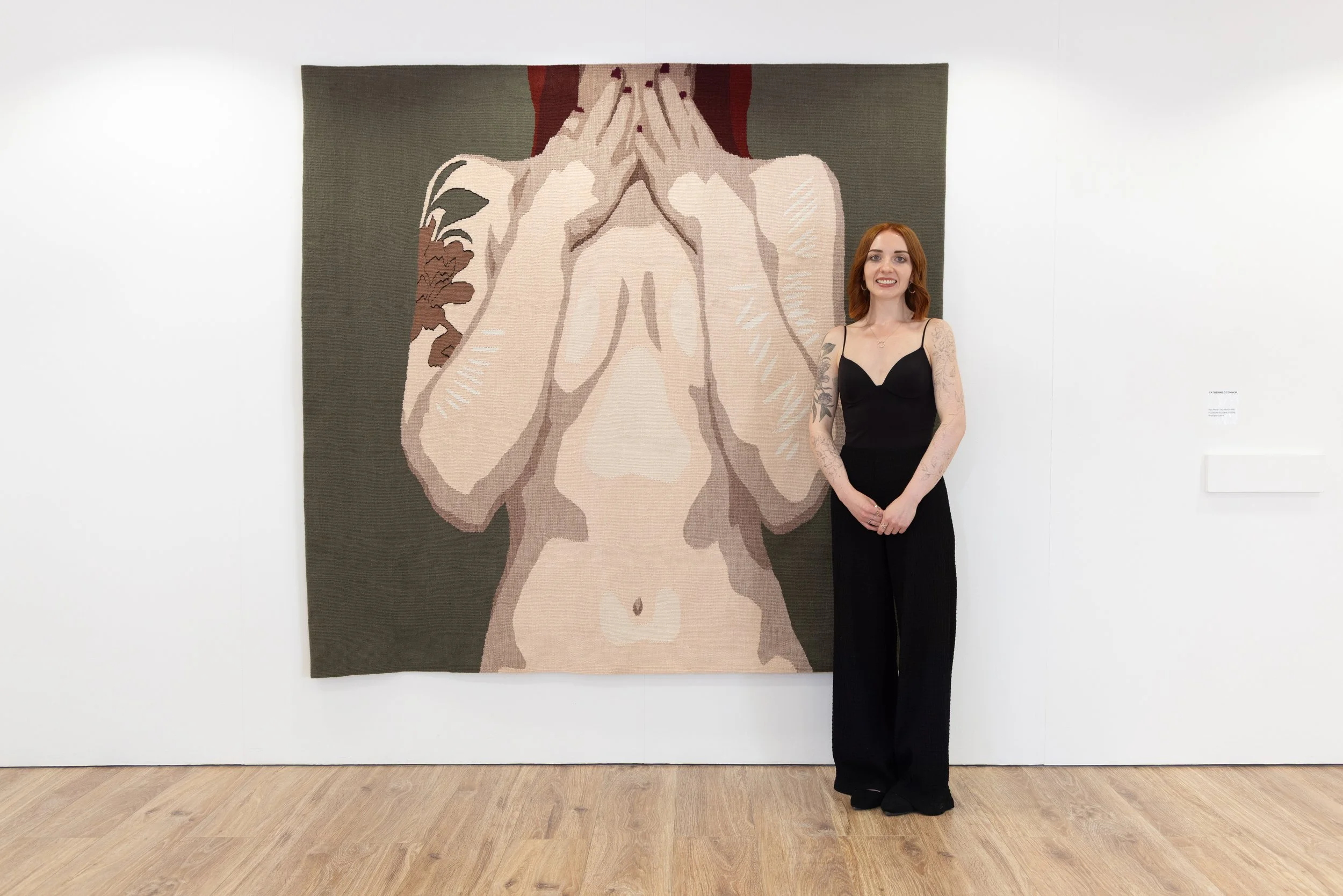
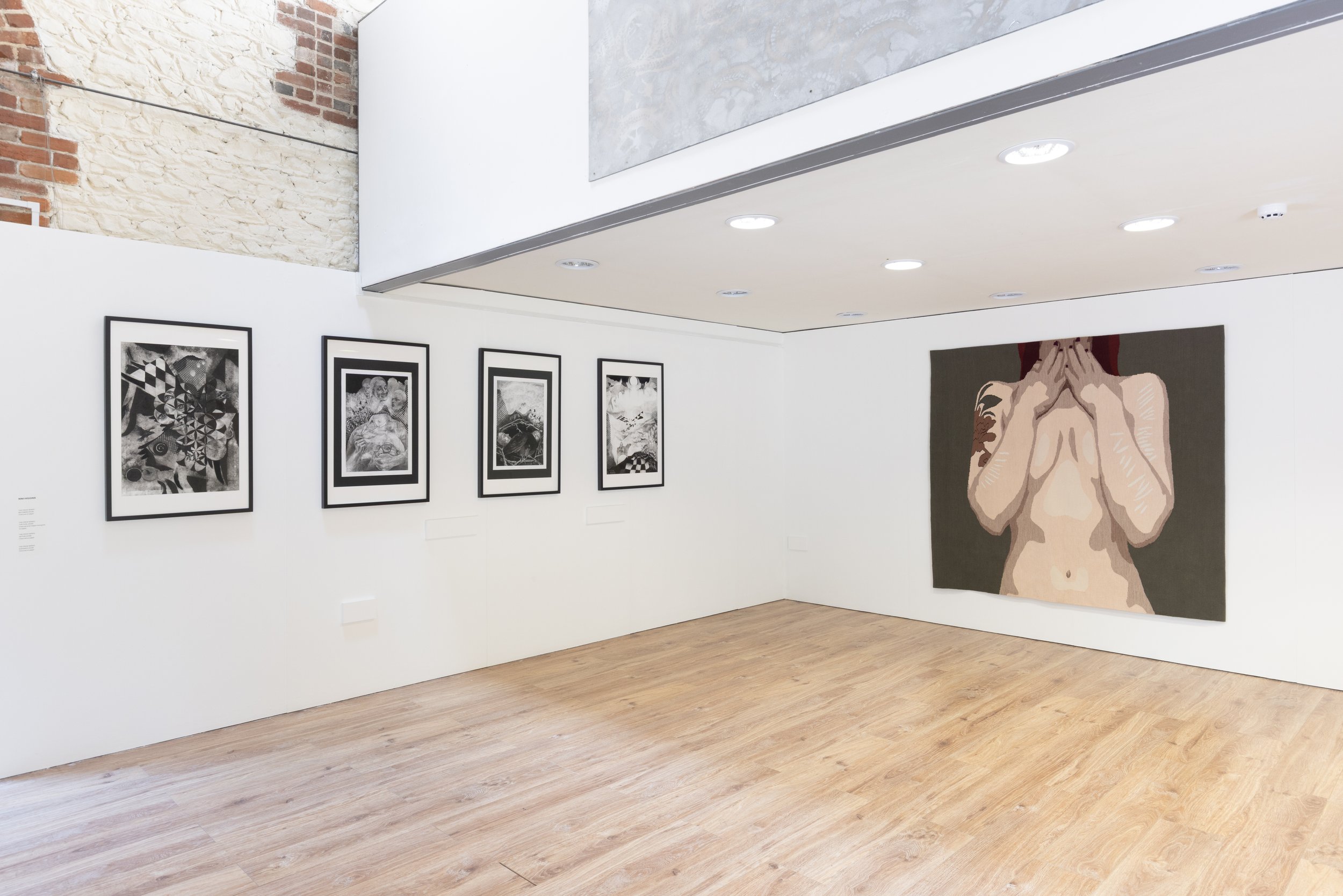
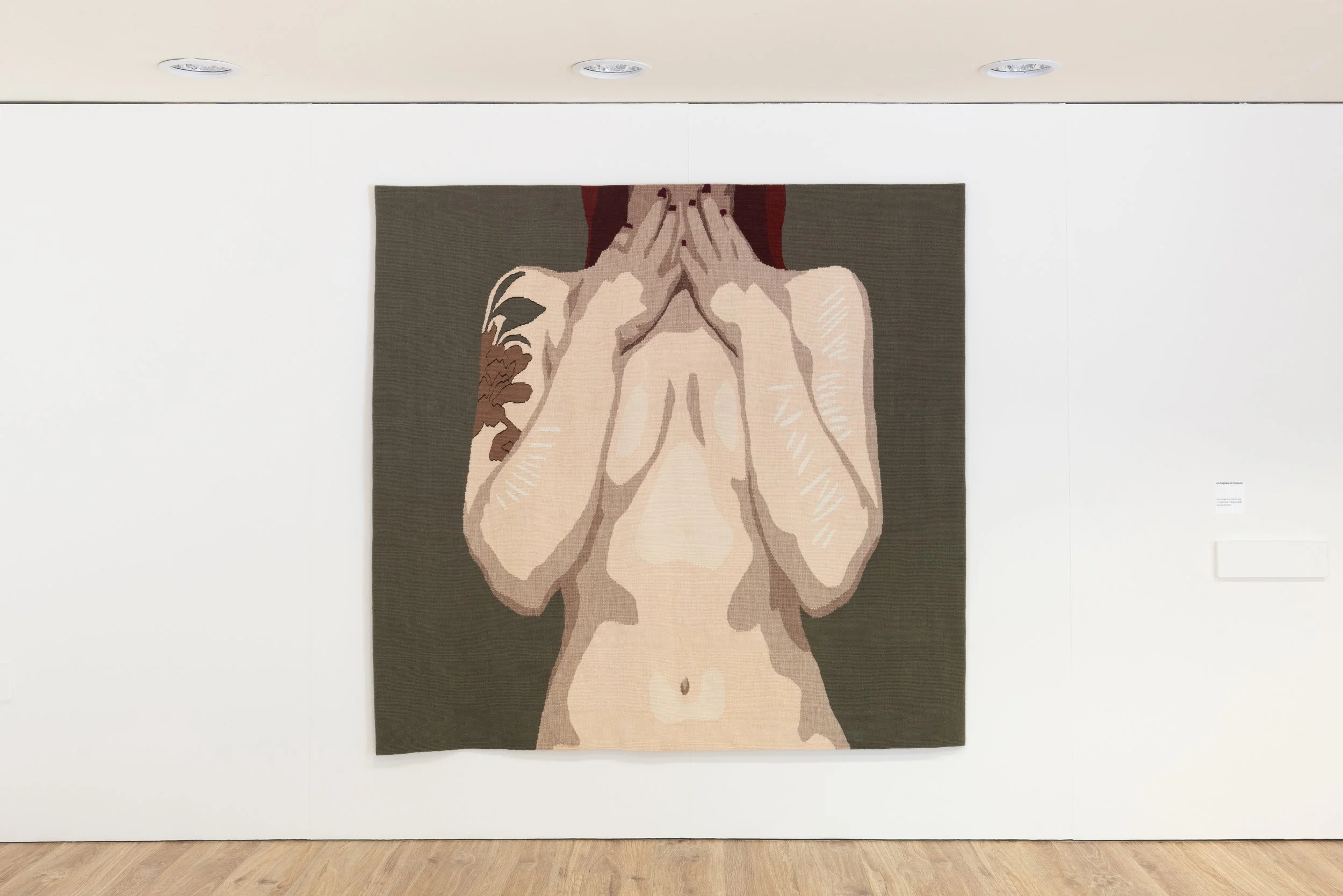
Yet from the Wreckage Flowers Bloomed (2026)
181 cm x 192cm
wool and cotton
Yet from the Wreckage Flowers Bloomed is a large-scale self-portrait tapestry that examines the intersection of female embodiment, trauma and reclamation. The work interrogates the ways violence is carried within and upon the body, while also exploring the possibility of healing, agency and visibility after rupture.
Trauma can fracture one’s sense of self to such an extent that identity becomes unstable. This fragmentation is embedded within the composition itself. The obscured face speaks to the dislocation and self-erasure that often accompany trauma, but it also creates space for universality. The concealed figure could be any woman; she could be every woman. In this way, the work moves beyond autobiography toward a broader feminist reflection on violence against women, silence, shame and survival.
Central to the work is the tension between visibility and concealment – the desire to speak out against violence battling with the instinct toward silence and disappearance. Scars, often concealed for the comfort of others, are rendered visible here without apology. The floral tattoo woven across the scarred skin functions as a site of self-agency and reclamation. There is a visual tension between beauty and rupture. The body becomes a site capable of holding contradiction – violence and compassion, damage and growth, grief and resilience. The title of the piece speaks to the persistence of life after trauma: the capacity for healing even in the aftermath of profound pain.
Materially and conceptually, the tapestry represents the culmination of my practice over the past two years. The slow and labour-intensive process of weaving became integral to the meaning of the work itself. The woven surface holds evidence of time, repetition and embodiment. At over six feet in scale, the tapestry physically occupies and claims its space on the wall. In a culture in which women are told to shrink and to remain silent, the work refuses to be diminished. It asserts the right of the female body to exist visibly and unapologetically.
Through this work, it is my hope that viewers will pause and resist looking away. Discomfort is an intentional part of the encounter. The tapestry asks audiences to confront realities that are often hidden or silenced. Ultimately, Yet from the Wreckage Flowers Bloomed is an act of reclamation: a refusal of silence, a rejection of shame, and an insistence upon visibility, survival and the right to occupy space unapologetically.